I’m Dennis Simsek, and this is my raw, first-person account of how health anxiety took hold of my life and how I slowly found my way back. This episode of the Health Anxiety Podcast is less about teaching and more about telling, the honest details I was asked to share so others might feel less alone.
How My Personal Journey Began
When I look back, my anxiety didn’t appear out of nowhere. It was seeded by the way my family handled stress, always asking “what could go wrong?” while assuming “what could go right” was secondary. That pressure and worry shaped how I learned to interpret the world, and it quietly shaped how I monitored my body.
As a kid I was soaking up behaviors from authority figures. As a teen, health worries were mild. In my mid-20s they escalated. Panic attacks showed up, suddenly and intensely, and my attention shifted from the outside world to every twitch and flutter inside me. The more I watched my symptoms, the more they amplified. That pattern runs deeper than most people expect.

Early Signs and Family Patterns
Growing up, I learned vigilance as a survival tool. Over time that vigilance became a default setting, always scanning for what might go wrong. Once panic attacks began, that internal scanner turned inward. Instead of asking what I needed externally, I started interrogating my body: “Why does this feel different? What does this mean?” Those questions kept spinning.
When Health Anxiety Took Over, My Recovery Journey
By my mid-20s I was getting to know ER staff by name. I’d go in thinking something serious was wrong, get tests, hear “everything looks fine,” feel temporary relief, then spiral back into fear. That pattern became its own ecosystem, panic, tests, relief, confusion, repeat.
That cycle ultimately pushed my nervous system into overdrive. I developed DPDR (derealization and depersonalization), feeling disconnected from my body and my life. I could touch something and not truly register it as real. Driving felt dreamlike. My vision got fuzzy. Emotions flattened. I couldn’t celebrate wins, and I couldn’t connect the way I wanted with family and friends. Hypervigilance became my baseline.
What DPDR Felt Like
DPDR was the nervous system’s last-ditch safety move. It muted emotion so I could survive, but surviving that way meant I wasn’t living. I was on guard constantly. Every small stressor felt magnified. I wanted instant relief, snacks, games, distractions, anything to feel alive again. Those quick fixes felt good briefly but kept me stuck and depleted.
Symptoms, Panic Attacks, and DPDR
Panic attacks served a purpose: they were extreme signals that my system had reached capacity. Often they pulled me out of toxic environments or relationships in that season of life, but they also kept my focus glued to bodily sensations. The more I tracked symptoms, the more my mind made stories about catastrophe. That fear fueled the symptoms, and the loop tightened.
The Instant-Gratification Trap: What Kept Me Stuck
When I was deep in it, my system wanted immediate comfort. Potato chips, sugar, gaming, anything that shifted the haze for five minutes. I even noticed the salt cravings and how little rituals temporarily steadied me. But those fixes rarely helped the nervous system re-center; they just offered a bandage that needed replacing.
Small Daily Changes That Shifted My Path
Healing didn’t happen overnight. It began with small, consistent adjustments that signaled safety to my nervous system:
- I stopped waking and reaching for my phone. I lay still for 20 minutes and came back to the breath whenever my mind raced.
- I began my day with warm lemon water and slow, purposeful breathing.
- I swapped intense workouts for a 15-minute brisk walk, keeping activity below the threshold that triggered alarm.
- I slowed the pace of my life, intentionally choosing not to rush toward instant fixes.
These micro-changes gave my system room to recalibrate. Over time, the nervous system learned a new baseline, one that didn’t live on the emotional roller coaster.
Choosing Non-performance, A Turning Point in My Personal Journey
A major shift came when I stopped performing to prove I was okay. Performance looks like checking boxes of “what will fix me”, ten strategies, ten supplements, ten routines, all deployed from a place of prove-and-control. I learned to do rituals and routines from a different place: honesty, not performance. If I was tired, I rested. If I felt anxious, I named it and stayed present rather than trying to manufacture a fake calm. That honesty signaled safety.
Practical Steps I Took to Stay Below the Threshold
My approach became less about fixing symptoms and more about preventing overload. That looked like:
- Identifying triggers and choosing when to engage.
- Communicating safety to my body before entering a stressful environment (mentally telling myself it was safe).
- Replacing high-intensity coping with gentle, grounding practices.
- Stopping the endless search for the “one book” or “one pill” that would end it all. Knowledge without the right mindset kept me stuck.
The point I want to stress: healing health anxiety is indirect. Trying to attack symptoms directly often increases the focus on them. Shifting identity and behavior slowly changed the internal story.
How I Changed My Habit Loop
Instead of immediately consulting symptoms for meaning, I learned to ask my body simple, gentle questions: “Can we slow down?” “Is it safe to stay?” I led with empathy, not control. In practice that meant pausing, breathing, and choosing lower-intensity actions until I felt steadier.
Trusting My Body and Letting Go, A Personal Account
The biggest leap was learning to leave my body alone, to stop trying to control every feeling or sensation. My body is intelligent and wanted space to do its work. The less I tried to solve every sensation with more thinking or more techniques, the more the symptoms relaxed. I leaned into surrender sessions and practices that helped me hold uncertainty without collapsing into fear.
I also realized that every tiny step mattered. My nervous system recorded each small move away from hypervigilance. Six months, eight months, a year later, those tiny deposits added up. Today I can look back and see a different person emerging, quieter, grounded, and less afraid of uncertainty. That shift runs deeper than a quick fix.
What I Want You to Remember
If anything I just said resonates, know this: healing is possible. You’re not broken beyond repair. You don’t need to attack every symptom head-on. Start with small, compassionate steps that keep your nervous system below its alarm threshold. Let go of performance and rest in authenticity. Make peace with discomfort, and the discomfort will stop running your life.
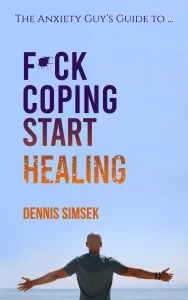
If you want guided help, my program is available through TheAnxietyGuyPrograms.com, use code FREEDOM30 for 30% off. I also share surrender sessions on YouTube and have written books available on Amazon for anyone who prefers reading.
You are more than anxiety. Every small, honest step you take matters. I love you and I believe in your recovery.
– Dennis