Sometimes I wake up and ask myself what to share with you. There are days when there is no big lesson to teach, just what I need to say from my heart about living with health anxiety. If you are in that place right now, know this: hope is often the turning point. I speak from my own experience, and I know what you are going through.
Facing the Daily Realities of Health Anxiety
I know what it feels like to go to bed wondering if I will be able to sleep. I know what it feels like to wake up and immediately scan my body for changes, noticing the same symptoms plus something new. The mind starts inventing catastrophes and the whole body slips into survival. After a while that survival state feels normal. It feels like the only way to be.
When I lived like that, I was physically present but mentally and emotionally somewhere else. I would be in a room with someone, but most of me was caught up in fear. It didn’t always feel like fear; it simply felt like my default. That’s one of the harsh realities I wish someone had spelled out for me: suffering can become so familiar that it blends into your daily life.
I also learned that the reason it sticks has layers. The anxiety masks other things, like exhaustion and unmet needs. If you slow down and let the body reveal itself, you’ll see that the problem often runs deeper than the symptom we think we must fix.
What survival mode does to you
When you live in that survival mode, everything is filtered through threat. Your decisions, your sleep, your appetite, your relationships. You think you need instant fixes. I used to want a solution that would work overnight. Over time I realized that healing is not an emergency rescue. It is a patient practice.
When it starts to feel normal
This is the moment when you stop fighting fear as a separate enemy and instead learn to notice it without becoming it. That tiny shift is where change begins.
Small Steps That Shift Your Day
If the survival part of you pushes to go from zero to one hundred, I want you to do the opposite. Start with one to two. Notice how the fear shows up. Say to yourself, there is the fear. There is the symptom. I am beside it, not swallowed by it.
When I began doing this, life didn’t flip instantly. But a tiny gap opened. I could be present for a TV show or a conversation. It felt little at first. Not better, just different. Those small differences add up.
Sitting beside the fear
This is not a dramatic meditation secret. It is a practice of simple noticing. Notice the spontaneous catastrophic thought. Notice the rush to interpretation. Name the pattern and then choose to remain. These small choices create space.
How to Live Alongside Symptoms: Realities and Routines
One of the realities I learned is that systems matter. Predictable patterns in the morning, afternoon, and evening ground you. When I set up simple routines, things that I followed almost without thinking, the body could start to catch up. Those routines do not have to be heroic. They can be as small as ten minutes of rest instead of scrolling on the phone.
I found that when I allowed myself a short pause, something would often show up. First a nudge to do something, then exhaustion, then an emotion. If I stayed with it, the adrenaline underneath began to drain. That pattern showed me that healing often runs deeper than the surface symptom. The body is catching up to what the mind has been ignoring.
The predictable day
A morning routine that is similar each day, a calm pause in the middle of the day, and a consistent wind down at night. These are not glamorous, but they are powerful. They make choice easier when fear shouts.
The ten-minute experiment
Try this: when you have ten spare minutes, get in your car or sit quietly, close your eyes, and do nothing but breathe. Notice the urge to jump up. Notice the urge to pick up the phone. Stay. See how much your system reveals when you give it room.
Choosing Presence Over Always Doing
Healing asked me to choose being over doing. It asked me to say no more often and to set boundaries that felt uncomfortable at first. I used to compensate with busyness and people pleasing. That exhausts the system and keeps the anxiety alive.
When I chose to put myself first, I felt guilty at first, then lighter. Saying no does not mean I am failing others. It means I am refusing to sacrifice my recovery. That’s a lesson that doesn’t feel good the first time, but it eventually becomes part of a new life.
The quiet lessons
As I lived differently alongside symptoms, quieter lessons arrived. You are allowed to slow down. You are allowed to be imperfect. You are allowed a little play. Those are small permissions that greatly change how you move through the day.
Why Healing Often Looks Messy
Healing is not tidy. It is not linear. You will have days that feel like progress and days that feel like backslide. That is normal. If you’re caught in that mess, embrace it. The mess usually means the body and mind are rebalancing.
I have had nights where I wanted to stay up because I thought I had to do more. Now I go to bed earlier. Small choices like choosing soup over processed food matter. They create a foundation where deeper healing can occur.
What I want you to know
You already know a lot. You probably have heard much of this before. The missing piece is often permission to slow down and to honor yourself. If you can choose that, everything else starts to make more sense.
If anything I said here landed with you, then I did what I came to do. If you know someone suffering from health anxiety, please share this post with them. I want people to feel better in any way I can.
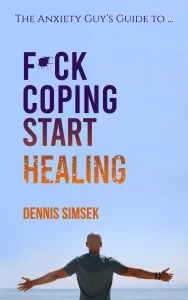
I invite you to explore more resources if you want structured help. I run a health anxiety recovery program and share videos and live sessions on my YouTube channel. I have also written books that many people have found useful.
Remember: you are more than anxiety. I have been where you are and I made it through. If I can do this, you can do this. I love you and I mean that.
Until next time, be gentle with yourself.